Best Smart Litter Boxes (2026)
Self-cleaning litter boxes are the most divisive purchase in pet tech: owners either call them life-changing or an expensive mistake. The difference usually comes down to picking the right mechanism for your cat and understanding the real running costs. We compared the five automated boxes that 2026 roundups recommend most — including total cost of ownership, not just the sticker price.
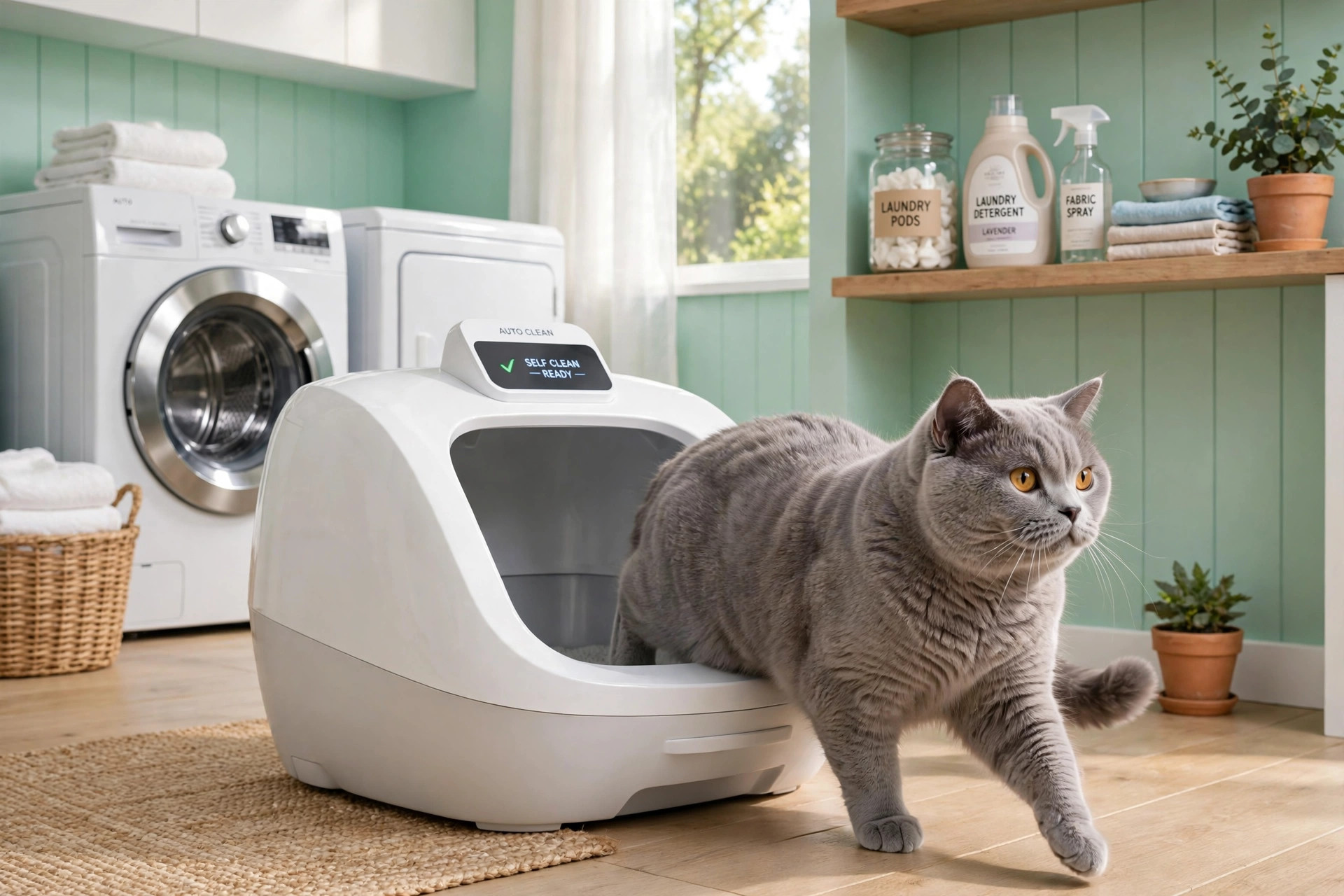
Quick picks
- Best overall: Litter-Robot 4 — the gold standard: best odor control, any clumping litter, multi-cat ready. Check current price
- Best value: PETKIT PuraMax 2 — roughly half the price, quietest tested, compact. Check current price
- Best open-top: Neakasa M1 — for anxious cats and large breeds (update firmware first). Check current price
- Best budget: PetSafe ScoopFree — cheapest upfront, but tray costs add up. Check current price
- Best mid-range enclosed: Fumoi — enclosed design and app control under $250. Check current price
New-model note: Whisker launched the Litter-Robot 5 in 2026 ($799 standard; $899 Pro with cameras). It has a thinner long-term reliability record than the 4, so our top pick stays with the LR4 for now — we'll update as owner data accumulates.
The 5 best smart litter boxes
1. Whisker Litter-Robot 4 — Best overall
The most consistently recommended self-cleaning box of 2026 across independent roundups. A rotating globe sifts waste into a sealed, carbon-filtered drawer, and it works with any clumping litter — no proprietary consumables.
Key specs: Globe-rotation sifting with QuietSift; OmniSense laser + 4 weight sensors; app tracks usage, cat weight, and litter/waste levels; any clumping litter; rated for up to 4 cats with weight-based cat identification; 25-lb cat weight limit; optional LitterHopper auto-refill accessory; advanced AI insights available as a $7.99/month add-on.
- Best odor control in class — carbon filter plus sealed drawer (multiple roundups)
- No proprietary litter or expensive consumables; any clumping litter works
- Multi-cat ready with per-cat weight tracking in the app
- Highest upfront cost in class at around $699
- Large footprint — needs roughly 27 × 25 inches of floor space
- Sensors can be finicky: owners report "ghost cat" detections, false full alerts, and periodic calibration needs
Typical price: around $699 (October 2026). Check current price
Best for: multi-cat homes that want the proven option. Skip if: floor space is tight or $699 is out of reach — the PETKIT below does 80% of the job for half the price.
2. PETKIT PuraMax 2 — Best value
The most credible Litter-Robot alternative: roughly half the price with comparable automation, and the quietest drum model in lab testing (34.8 dB vs 44.9 dB for the LR4). The compact vertical design is a genuine advantage in apartments.
Key specs: Rotating drum; 11–12 safety sensors; triple odor control (sealed bin, carbon filter, optional deodorizer spray); WiFi app with usage, litter-level, and weight monitoring; 7L waste drawer; 76L capacity; clumping clay litter; ~1.5 sq ft footprint; 1-year warranty.
- About half the Litter-Robot 4's price with similar automation
- Quietest tested — meaningful if the box sits near living space
- Compact footprint fits small apartments
- 7L waste drawer fills faster in multi-cat homes
- App includes promotional content and feels less polished
- Shorter 1-year warranty and more variable customer service than Whisker
Typical price: around $280–$320 (October 2026). Check current price
One caution: the optional ozone deodorizer isn't ideal for small, unventilated spaces — run it with ventilation or skip that feature. Best for: apartments and value seekers. Skip if: 3+ cats — the drawer will need constant emptying.
3. Neakasa M1 (Open-Top) — Best open-top
The pick for cats that refuse enclosed boxes and for large breeds (33-lb capacity, biggest in class). The open-top design eliminates the #1 reason cats reject automatic boxes — but read the safety note below before buying.
Key specs: Open-top roller design; 11L waste capacity with pull-and-wrap bag system; 33-lb cat weight capacity; 5 infrared + 4 weight sensors with auto-pause; app with usage and health monitoring; clumping clay litter; 2-year manufacturer warranty (some retailers list 12 months — confirm at purchase).
- Best for skittish or anxious cats — open top removes enclosure refusal
- Largest weight capacity in class; suits Maine Coons
- Generous 11L bin with clean pull-and-wrap disposal
- Safety: verified injury incidents were documented and addressed by a firmware update — ensure firmware is current before first use
- Weaker odor containment than enclosed designs; louder cycle
- More litter tracking; some owners report sensor issues after 6+ months
Typical price: around $399–$499 list (frequently discounted; October 2026). Check current price
Best for: anxious cats, large breeds. Skip if: odor control is your top priority — enclosed designs win there.
4. PetSafe ScoopFree — Best budget (with a catch)
The cheapest way into automated litter boxes: a rake sweeps waste into a covered compartment 20 minutes after use, and disposable crystal trays mean you never touch litter. The catch is the running cost — trays can exceed the unit's price within a year.
Key specs: Rake mechanism with 20-minute delay; disposable pre-filled crystal litter trays (crystals absorb urine, dehydrate solids); no WiFi or app needed; usage health counter; safety sensors; reusable tray option available.
- Lowest upfront cost of any automated box (~$120–180)
- Simplest setup — slide in a tray, plug in, done
- 99% dust-free crystals with minimal tracking
- Crystal trays run ~$15–20 each; reviewers estimate $20–30/month per cat — the most expensive to own long-term
- Smaller dimensions don't suit large cats
- Odor builds by end of week 2; some cats refuse crystal litter
Typical price: unit around $120–$180; trays ~$15–20 each (October 2026). Check current price
Best for: single-cat homes on a budget whose cat already accepts crystal litter. Skip if: multiple cats — tray costs scale linearly and get painful fast.
5. Fumoi Automatic Litter Box — Best mid-range enclosed
An enclosed, app-controlled box under $250 — the budget-friendly middle ground between the ScoopFree's tray costs and the Litter-Robot's sticker price. Washable tray and reusable liner cut ongoing costs.
Key specs: Enclosed rake-style design; app monitoring; washable litter tray with reusable liner; large litter capacity; safety sensors; standard clumping litter.
- Enclosed design and app control at a mid-range price (under $250)
- Washable tray + reusable liner reduce consumable costs vs. ScoopFree
- Uses standard clumping litter — no lock-in
- Less established brand — long-term reliability is uncertain
- Smaller waste drawer needs more frequent emptying
- App less refined than Litter-Robot/PETKIT; basic odor control
Typical price: under $250 (October 2026). Check current price
Best for: buyers who want enclosed + app without the premium price. Skip if: brand track record matters to you — this one's still proving itself.
Side-by-side comparison
| Box | Mechanism | Litter type | Max cats | App | Typical price* | Running cost |
|---|---|---|---|---|---|---|
| Litter-Robot 4 | Rotating globe | Any clumping | 4 | Yes | ~$699 | Low |
| PETKIT PuraMax 2 | Rotating drum | Clumping clay | 2–3 | Yes | ~$280–320 | Low |
| Neakasa M1 | Open roller | Clumping clay | 2–3 | Yes | ~$399–499 | Low |
| PetSafe ScoopFree | Rake | Crystal trays | 1–2 | No | ~$120–180 | High ($20–30/mo) |
| Fumoi | Enclosed rake | Clumping | 1–2 | Yes | <$250 | Low |
*October 2026 snapshots. Prices fluctuate — check the live price before buying.
What to look for before you buy
Calculate total cost of ownership, not just the sticker
The ScoopFree looks cheapest at ~$150 until you add $20–30/month in trays — over two years it can cost more than the Litter-Robot 4. Always multiply consumables by 24 months before comparing.
Match the box to your cat's temperament
Enclosure refusal is the top reason automatic boxes get returned. Anxious, senior, or previously outdoor cats often reject covered designs — the open-top Neakasa M1 exists for exactly this case. When in doubt, keep a traditional box alongside the new one for 2–3 weeks.
Check the weight range
Most boxes cap at 15–25 lbs per cat. Maine Coon and large-breed owners should verify the limit — the M1's 33-lb capacity leads the class.
Safety sensors are non-negotiable
Every box here has safety sensors that pause the cleaning cycle when a cat is detected. After documented incidents with one model were fixed via firmware, the lesson stands: buy from brands with active firmware updates, and keep the firmware current.
Odor control is about sealing, not scent
The best odor control comes from sealed waste drawers and carbon filters (Litter-Robot 4, PuraMax 2), not fragrances. Open-top designs inherently contain less odor — budget for more frequent emptying.
App features worth paying for
Usage tracking doubles as a health monitor: changes in litter-box frequency are often the first sign of urinary or digestive issues. Weight tracking (LR4, PuraMax 2) adds another early-warning layer.
FAQ
Are self-cleaning litter boxes worth it?
For most owners: yes, if you pick the right one. The time savings are real — emptying a drawer weekly instead of scooping daily. The break-even versus a traditional box is typically 12–18 months once you factor in litter savings (automated boxes waste less litter). The main risks are enclosure refusal and sensor quirks, both manageable with the right model and a transition period.
Will my cat actually use a self-cleaning litter box?
Most cats adapt within 1–2 weeks. Keep the old box next to the new one, let the new box run unplugged for a few days so the cat explores it, and don't remove the old box until the cat uses the new one consistently. Anxious cats do better with open-top models.
How often do you empty a self-cleaning litter box?
Typically every 7–14 days for one cat, depending on drawer size — the Neakasa M1's 11L bin stretches further than the PuraMax 2's 7L drawer. Multi-cat homes should expect weekly emptying regardless of model.
Do self-cleaning litter boxes smell?
Less than traditional boxes, but they're not odor-free. Sealed drawers with carbon filters (Litter-Robot 4) perform best. All models need the drawer emptied on schedule — a full drawer will smell no matter the design.
What litter works in automatic boxes?
Most rotating-drum and globe designs use standard clumping clay litter — the Litter-Robot 4 accepts any clumping brand. The PetSafe ScoopFree is the exception: it requires proprietary crystal trays. Never use non-clumping litter in a sifting mechanism unless the manual allows it.
Related guides
- Best Automatic Pet Feeders (2026) — automate mealtimes too
- Best Pet Cameras (2026) — check in on your cats remotely
- How to Choose Smart Pet Tech — the starter guide to connected pet gear